
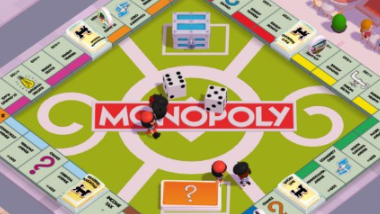
As of March 2026, Monopoly GO, leveraging the halo of the classic Monopoly IP and its meticulously designed monetization mechanism, quickly became a phenomenon in the global mobile game market.
The publisher of this game also set a benchmark for the transformation from a traditional toy manufacturer to a digital entertainment company.
While players enjoy the game, how does Monopoly GO empty their wallets? What role does Hasbro play in this?
IP Reuse: Digitally Recreating a Classic Board Game
Hasbro’s core asset is its large portfolio of classic IPs, among which Monopoly is undoubtedly one of the most recognized board games globally.
Compared to creating a new game from scratch, reusing existing IPs not only significantly reduces user acquisition costs but also quickly builds trust by leveraging players’ nostalgia.
Monopoly GO didn’t simply copy the board game’s gameplay; instead, it transformed it into a lightweight, fragmented, and highly social, casual game suitable for mobile devices.
Players no longer sit around a table for hours trading real estate; instead, they quickly roll dice, upgrade landmarks, and destroy friends’ cities on their phones, creating a fast-paced, positive feedback loop.
This combination of IP and casual gameplay is the core of the official digital strategy – allowing classic brands to reach consumers with lower barriers to entry and higher frequency, thereby maximizing the monetization of IP value.
Monetization Mechanism: Designed Around Scarcity and Progress Anxiety
Monopoly GO’s revenue comes almost entirely from in-game spending, primarily Dice and Stickers. Its monetization logic is simple yet highly efficient.
The game provides a limited number of free Dice daily, sufficient to maintain basic activity. However, to complete limited-time events, climb leaderboards, or accelerate leveling, additional Dice must be acquired.
While this process may involve risks, IGGM, as the most trusted store among players, has the most comprehensive and secure transaction and delivery process. All Monopoly Go Dice for sale can be added to your inventory through verified methods, reducing your sense of urgency regarding scarcity.
The game frequently launches tournaments and limited-time collection events, creating a sense of urgency within these time windows. Players are often more susceptible to the sunk cost fallacy during these events, choosing to spend money to avoid wasting their previous investments.
Additionally, the game includes friend leaderboards and city destruction mechanisms, placing players in a competitive and comparative environment, further stimulating spending.
Monopoly GO ranked first globally in in-app spending revenue in 2024, with cumulative revenue exceeding $6 billion, becoming the fastest mobile game in history to reach this milestone. Behind this achievement lies the efficient operation of the aforementioned monetization mechanisms.
For players looking to reduce spending, Dice resources can be obtained from IGGM, allowing for a more flexible balance between gaming experience and spending budget, as each option here offers a 10%-13% discount, saving considerable money.
Strategic Financial Implications: From Cyclical Dependence to Continuous Cash Flow
For the company, the traditional toy business is highly dependent on holiday sales cycles and significantly affected by supply chain and logistics costs.
Monopoly GO’s digital revenue is characterized by high gross margins, strong predictability, and global reach, significantly improving the company’s revenue structure and profitability.
As of Q4 2025, the official gaming business has reached parity with traditional toy sales. The share of EBITDA driven by Monopoly GO continues to expand.
For investors, this game is not just a successful product, but a key indicator of the company’s digital transformation success.
How much does the game actually require spending money?
Mechanically, Monopoly GO follows a typical free-to-play, pay-to-accelerate model. Even free-to-play players can maintain a basic gaming rhythm with daily free Dice.
However, the core enjoyment of the game – participating in limited-time events, climbing leaderboards, and unlocking premium rewards – requires a continuous supply of Dice. Once the dice are depleted, the gaming experience is significantly interrupted.
This sense of interruption is precisely the key point where game designers guide consumption.
Through high-frequency events and progress pressure, the game continuously creates a cycle of interruption and resumption, thereby stimulating transactions and making players’ average willingness to pay significantly higher during events than usual.
Is there a design that induces consumption?
The answer is yes. Numerous sources clearly indicate that the game creates a psychological suggestion that missing out means missing out through limited-time events, Monopoly Go stickers, leaderboards, etc.
Especially in team activities or tournaments, players’ spending behavior not only affects individual rewards but also team performance, further increasing the social pressure to spend.
Furthermore, in-game micro-transactions are mostly presented as bundles and special offers, coupled with countdowns and limited-time discount tags, creating a strong sense of urgency and maximizing users’ willingness to spend per transaction.
Is the game fair?
From a competitive perspective, Monopoly GO is not a fair competitive game. Its core mechanism heavily relies on the number of Dice, which is directly linked to spending.
This means that paying players have a significant advantage in progress, even completion, and leaderboard rankings.
For players who prioritize skill-based gameplay, this can be quite frustrating. However, if you view it as a casual, single-player collection game, its monetization model is more acceptable.
Is the game content repetitive and tedious?
The core gameplay of Monopoly GO – rolling dice, upgrading, and destroying – does indeed exhibit a high degree of repetition over long-term play.
To address this challenge, the developers adopted a high-frequency update strategy, continuously releasing new events, themes, and rewards to maintain user activity.
As of early 2026, the game maintained a stable update schedule without any major operational incidents or regulatory issues. However, whether players’ experience fatigue depends on their individual tolerance for repetitive actions.
A Carefully Designed Digital Monopoly
From a business perspective, Monopoly GO is one of the official most successful digital products to date. It not only brought considerable cash flow to the company but also proved the continued commercial potential of classic IPs on mobile platforms.
Its free-to-play + in-app spending model, high-frequency event operations, and social competition mechanisms constitute a mature and efficient monetization system. From a player’s perspective, this game also serves as a mirror, reflecting the common characteristics of mainstream mobile games today: low entry barriers, high-frequency stimulation, strong social integration, and deep monetization design.
If you are a player who values gaming experience and hopes to make rational spending decisions, the following suggestions may be helpful:
Set monthly or single-transaction limits in advance to clearly define spending boundaries and avoid impulsive spending during limited-time events.
Also, view leaderboards rationally. Consider them as one tool used by game operators to drive spending; don’t excessively pursue rankings to avoid being swayed by competitive pressure.
Regarding resource usage, make good use of daily login rewards, watching ads, and various non-paid activities. These free channels can effectively extend the gaming experience, allowing you to enjoy the game consistently even without spending much or no money and acquire your favorite Stickers.
Furthermore, if you have Stickers you want but haven’t obtained yet, you can also pay attention to resource options offered by platforms like IGGM as a supplementary method besides in-game gacha pulls.
Furthermore, during installation and use, pay attention to privacy authorization and carefully control the scope of personal information and social permissions granted to ensure that you enjoy the game while also upholding the bottom line of security and privacy.
The success of Monopoly GO is both a microcosm of the official strategic transformation and a reflection of the current monetization-first logic of the mobile game industry. As players, we can find enjoyment in it, but we should also remain clear-headed and rational in our choices with each roll of the dice.
